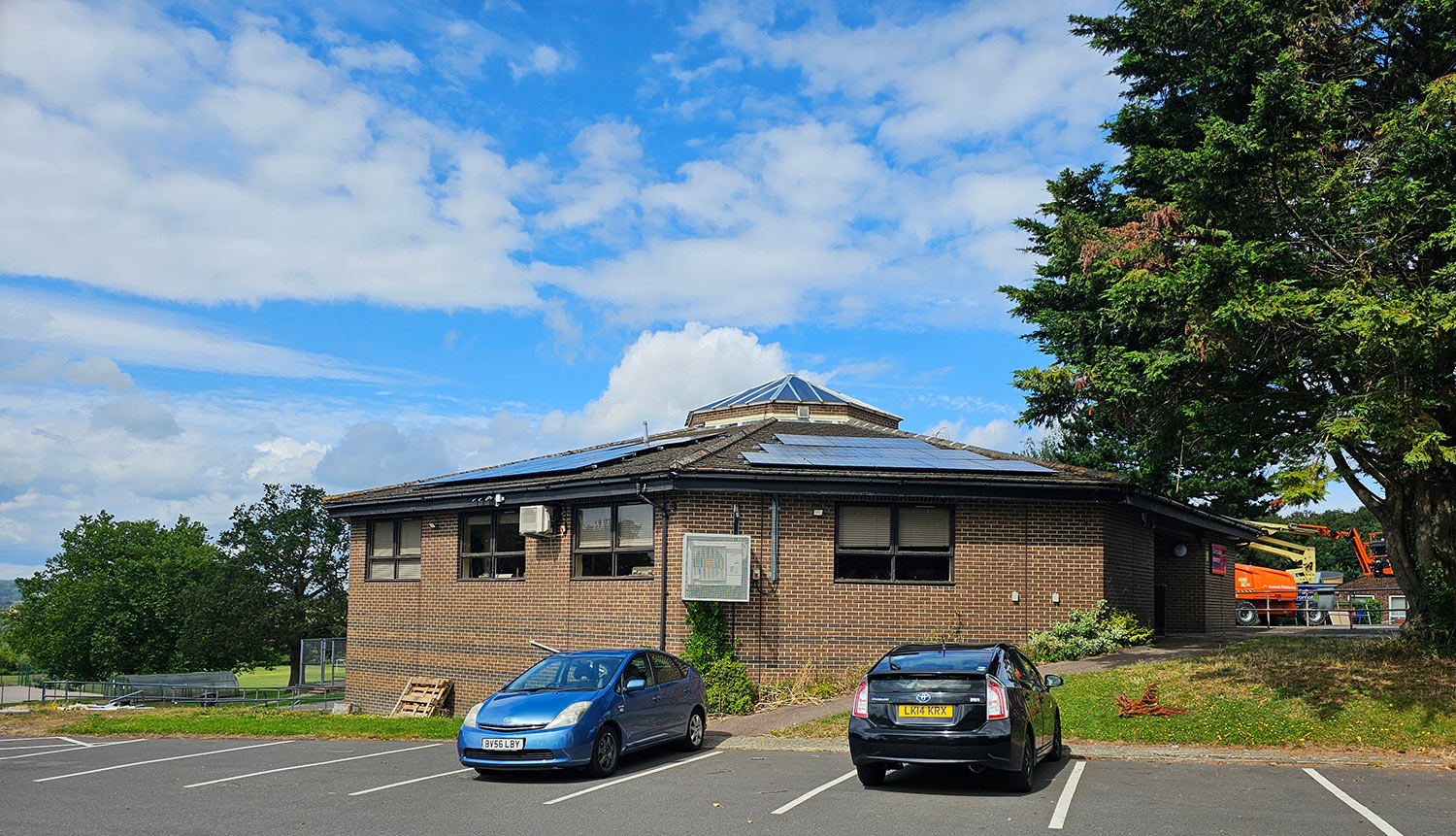
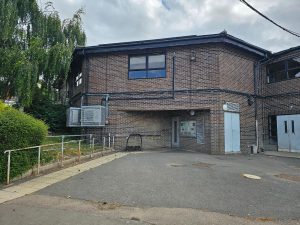
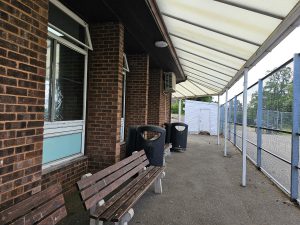
One of the biggest challenges was the late appointment, with mobilisation required just two weeks before the planned start date. This created immediate pressure around labour planning, supply chain coordination and securing key materials during the busy summer holiday period, when demand and stock availability were already heavily constrained.
The school holiday timing also impacted the project from a decision-making perspective, with several key stakeholders and decision makers on extended leave during critical stages of the programme. This required proactive communication, fast turnaround of approvals where possible, and careful management of site progress to avoid delays.
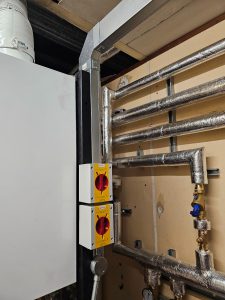
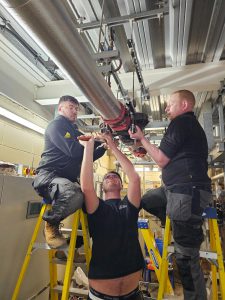
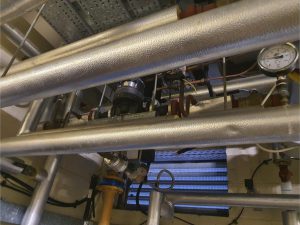
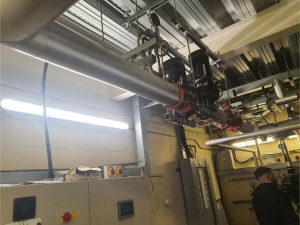
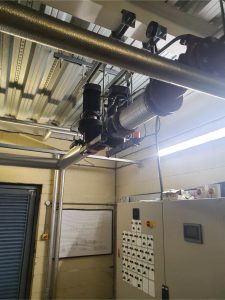
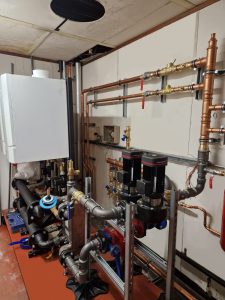
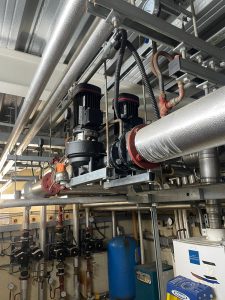
Technically, the absence of accurate as-built drawings created further complexity, particularly when routing new heating distribution pipework through existing buildings. Extensive on-site investigation and real-time problem solving were required to identify viable routes while minimising disruption to the fabric of the buildings and maintaining progress on programme.
Electrical infrastructure also presented challenges, with incoming power supplies found to be below the levels assumed within the original specification. This meant certain buildings required revised solutions and additional design input to ensure new systems could be installed safely and effectively. In addition, late heat loss survey results led to a last-minute change in scope and an adjustment to the renewable technologies being installed, requiring rapid redesign and procurement changes while maintaining the overall delivery programme.
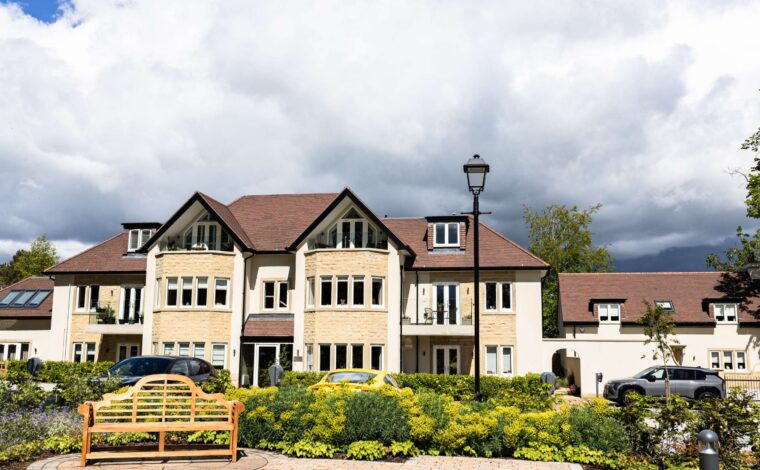
Despite these pressures, the project was successfully completed within the accelerated timescales, delivering upgraded, efficient and future-ready building services across the site.